

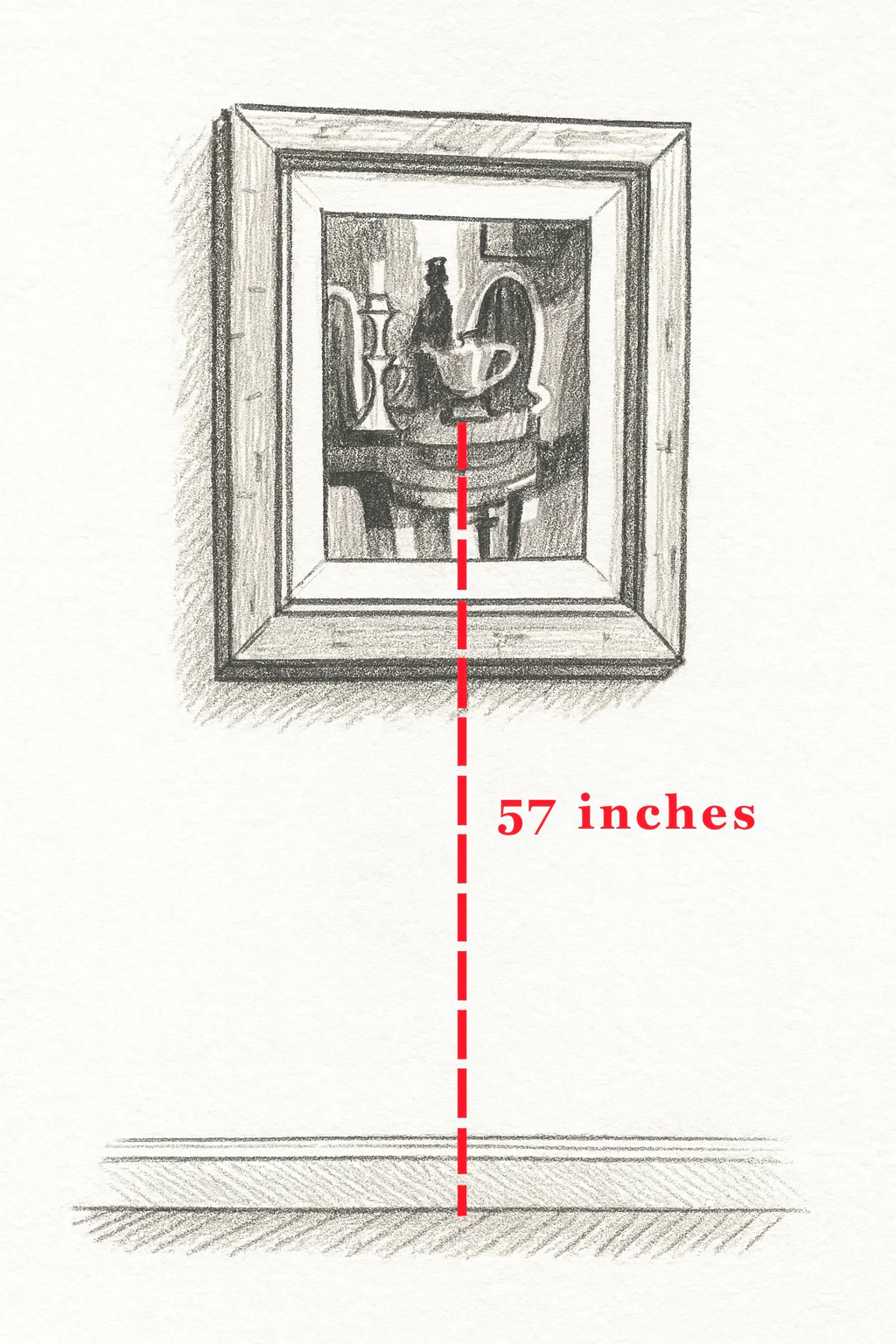
Don’t let a misplaced nail ruin your beautiful new artwork. This definitive guide breaks down the simple, foolproof art placement rules that designers use to get it right every time. You’ve found the perfect piece, waited for it to arrive, and now it’s leaning against the wall. Why? Because the fear of hanging it too high, too low, or crooked is real. But here is the secret: how to hang art isn’t a guessing game. It’s a science based on simple interior design basics.
The Golden Rule of Hanging Art: The 57-Inch “Eye Level Rule”
If you only remember one thing from this guide, let it be this. Museums and galleries worldwide use a specific standard to ensure art looks its best.
What is the 57-Inch Rule and Why Does It Work?
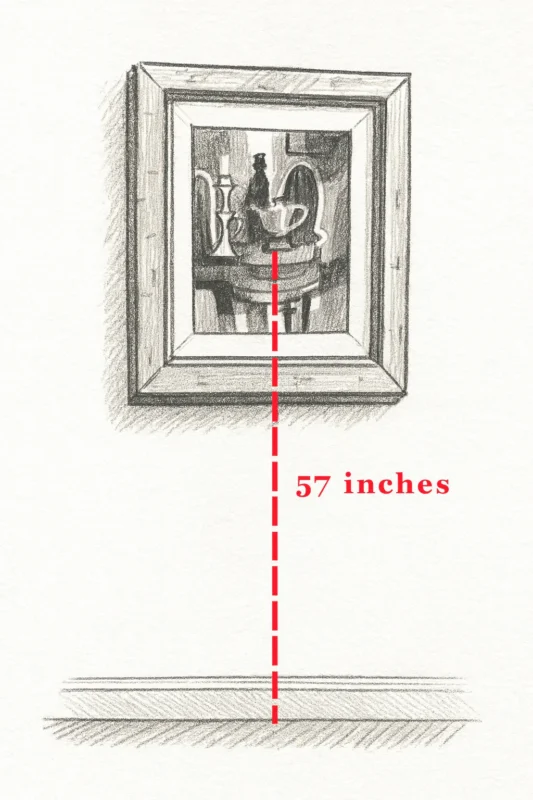
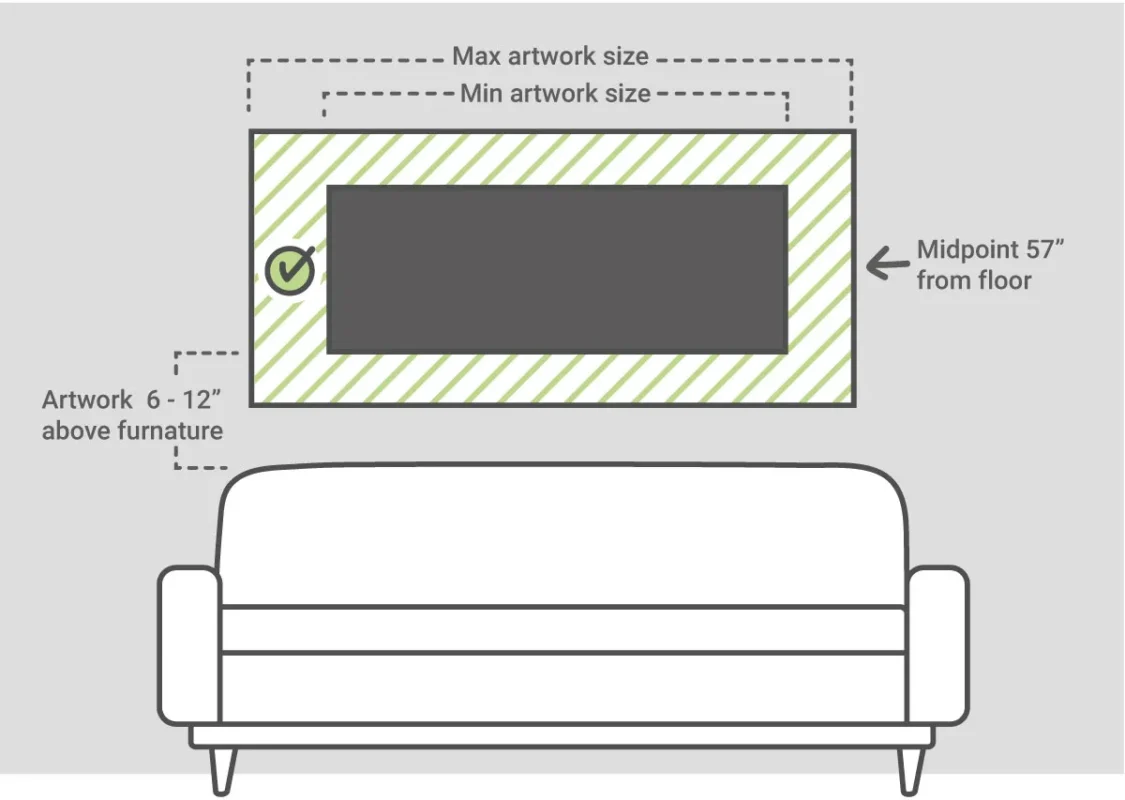
The eye level rule states that the center of your artwork (not the top hook) should be 57 inches from the floor. Why 57 inches? This represents the average human eye level. Hanging art at this height ensures it feels comfortable to look at, rather than forcing you to crane your neck up or look down.
How to Measure and Mark 57 Inches on Center
Here is the math made simple:
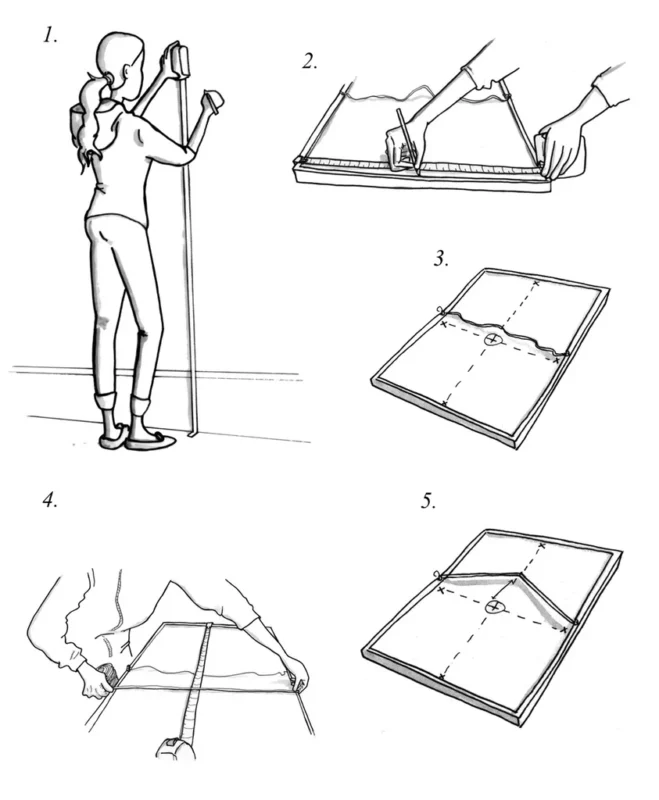
- Measure 57 inches up from the floor and make a light pencil mark on the wall. This is where the center of your art should be.
- Measure the total height of your artwork and divide by 2.
- Measure the distance from the top of your frame to the tightening point of your hanging wire (or hook).
- Subtract the “hook distance” from “half the height.”
- Add that resulting number to your 57-inch mark on the wall. That is where your nail goes!
A Common Mistake to Avoid: Don’t Hang Art Too High!
The most common mistake in rules for hanging art is hanging it too high. When art is closer to the ceiling than the furniture below it, it feels disconnected and floating. Trust the 57-inch rule; it connects the art to the human scale of the room.
Art Placement Rules for Specific Furniture Pairings
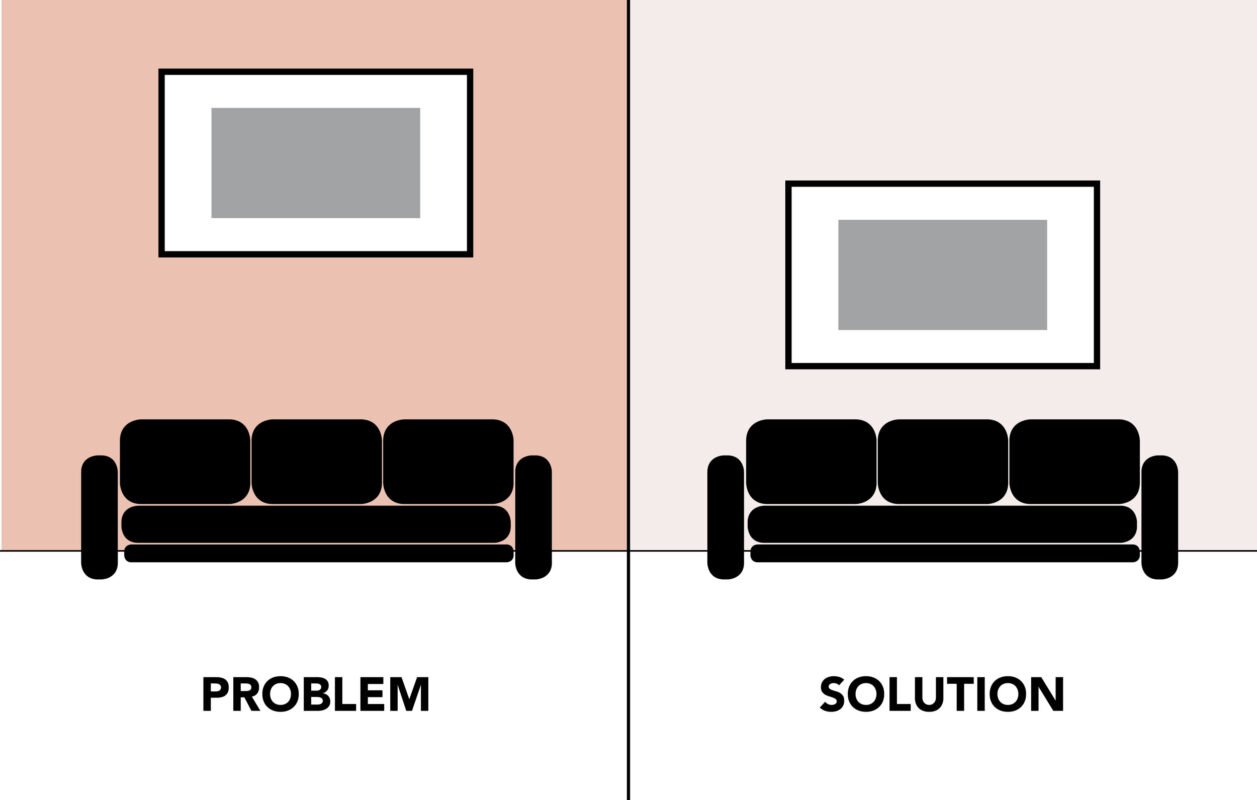
The 57-inch rule applies to open walls. However, when you hang art above furniture, the furniture becomes the anchor, and the rules shift slightly.
Art Over a Sofa: The 6-10 Inch Rule
When hanging art above a sofa, the connection between the two is vital. The bottom of the frame should be 6 to 10 inches above the back of the sofa. This ensures they read as a cohesive visual unit rather than two separate floating objects.
Art Over a Bed or Headboard: Creating a Cohesive Unit
Similar to the sofa, art above a bed should sit about 8 to 10 inches above the headboard. If you hang it too high, the eye gets lost in the gap. You want the art and the bed to feel like they belong together.
Art Over a Fireplace Mantle or Console Table
For mantles and consoles, the gap can be slightly smaller, around 4 to 6 inches. This allows the artwork to feel grounded by the architectural element or furniture piece below it. Find the piece that’s worthy of your wall. Explore the Oilarthub collection.
Rules for Groupings and Gallery Walls
Hanging multiple pieces? The spacing between them is just as important as the art itself.
The 2-3 Inch Rule for Spacing
How far apart to hang pictures? The standard designer recommendation is 2 to 3 inches between frames. If the gap is too wide, the collection looks scattered and disjointed. If it’s too narrow, it looks crowded.
Treating the Entire Grouping as a Single “Piece”
When hanging a gallery wall or a diptych, treat the entire arrangement as one single artwork. Find the center point of the entire group and place that at 57 inches (or the appropriate height above furniture).
A Step-by-Step Guide to the Physical Hanging Process
Now that you know where to put it, here is how to do it securely.
Choosing the Right Hardware (Nails, Hooks, and Anchors)
For small, light pieces, a simple nail might suffice. For larger, heavier works (like our textured paintings), use proper picture hooks rated for the weight. For very heavy pieces or drywall installation, wall anchors or locating a wall stud is essential for safety.
The “Two Nails” Trick for Keeping Large Art Level
Tired of straightening your pictures? Use two hooks (or nails) spaced a few inches apart instead of just one in the center. This prevents the artwork from shifting or tilting over time, keeping it perfectly level.
Pro Tip: Using Painter’s Tape for Perfect Placement
Before making any holes, use painter’s tape to mark the outline of the frame on the wall. This allows you to step back, check the height and position, and make adjustments without damaging your paint.
Hang with Confidence, Enjoy with Pride
Hanging art doesn’t have to be a source of anxiety. By following these simple art placement rules—the 57-inch rule, the furniture connection, and consistent spacing—you can hang any piece with the confidence of a gallery curator. When your art is placed correctly, the entire room feels balanced, harmonious, and finished.
Now that you have the confidence to hang any artwork perfectly, it’s time to find the piece that’s worthy of your wall. Explore the Oilarthub collection.
Your Final Art Hanging Questions Answered
Do these rules apply to very large or oversized art? Yes, but with a caveat. For extremely large pieces (e.g., 7 feet tall), focusing on the 57-inch center might place the bottom too close to the floor. In these cases, prioritize visual balance and ensure the top doesn’t crowd the ceiling.
What if my ceilings are very high or very low? If you have standard 8-foot ceilings, stick to the rules. If you have soaring cathedral ceilings, you can hang art slightly higher (center at 60 inches) to account for the vertical volume, but don’t go too high or you’ll lose the connection to the furniture.
How do I hang art on a brick or concrete wall? You will need a masonry drill bit and specific masonry anchors or screws. Alternatively, brick clips (which grip the brick) can be a great non-damaging solution for lighter pieces.
Is it better to hire a professional to hang my art? For standard pieces, these how to hang art tips are all you need. However, for extremely heavy, oversized, or high-value artworks, or for installation in difficult locations (like a high stairwell), hiring a professional art installer is a wise investment. Start your collection at Oilarthub.