

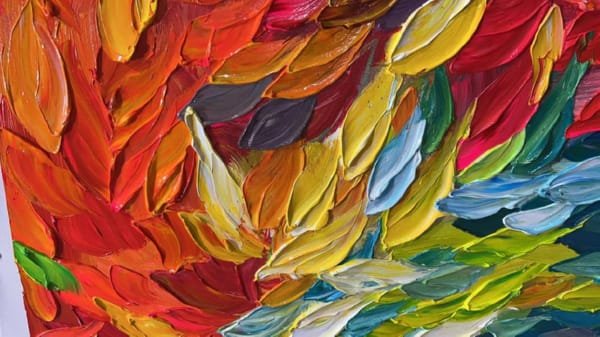
Move beyond just “liking” a painting. This guide will teach you the art of appreciation, helping you to see the hidden stories in texture, light, and shadow. Have you ever stood before a beautiful abstract art piece and wondered, “What am I supposed to be looking for?” You’re not alone. The great news is, you don’t need an art history degree to deeply connect with an artwork. This guide provides a simple 5-step method to “read” a textured painting, turning every viewing into a journey of discovery.
Step 1: Start with the Big Picture – Composition and Flow
Before you dive into the details, take a step back. The first step in art appreciation is to observe the artwork as a whole. How does it command the space? What is the overall feeling or mood?
Identifying the Focal Point
Let your eyes relax and notice where they are naturally drawn first. This is the focal point. Is it a bright splash of color, a particularly thick area of texture, or a point of high contrast? Understanding where the artist wants you to look first is the beginning of understanding the painting’s story.
Following the Energy and Movement on the Canvas
Once you’ve found the focal point, follow the energy and movement of the piece. Do the lines and shapes guide your eye in a circle, across the canvas, or upwards? The overall composition is like the painting’s body language; it tells you if the piece is calm and stable or energetic and dynamic.
Step 2: Zoom In on the Texture in Art
Now it’s time to get closer. The most unique aspect of a textured painting is, of course, the texture in art itself. This is where you can see the artist’s hand at work and uncover the painting’s unique personality.
Understanding the Language of Brushstrokes and Palette Knife Marks
Examine the individual marks. Are the brushstrokes long and flowing, or short and sharp? Can you see the clean, confident edges left by a palette knife? Each mark is a decision, a word in the artist’s visual language, conveying everything from gentleness to raw power.
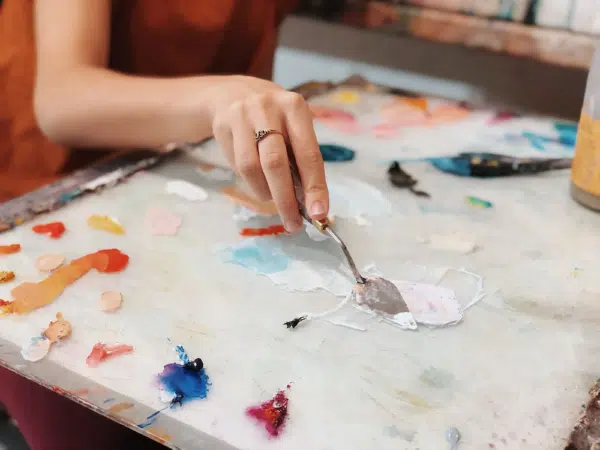
Noticing the Layers: What Lies Beneath the Surface?
Look at the edges of the thickest paint. Can you see other colors peeking through from underneath? Artists often build up many layers of paint to create rich, complex colors and a sense of history within the piece. Noticing these hidden depths adds another level to your art appreciation.
The Emotional Quality of Different Textures (Rough, Smooth, Sharp)
How does the texture make you feel? A rough, sandy surface might feel earthy and grounding. A smooth, glossy finish can feel sleek and modern. Sharp, jagged textures might feel energetic or even aggressive. The physical quality of the surface is directly tied to its emotional impact.
Step 3: Observe the Dance of Light and Shadow
A textured painting is a living object that interacts with its environment. The play of light and shadow across its surface is one of its most captivating features. This is a key part of what to look for in a painting.
Why Viewing Angle and Lighting Matter
Try moving from side to side. Notice how the highlights and shadows shift. The viewing angle can completely change which parts of the texture are emphasized. This is why the right lighting is so crucial; it brings the painting’s three-dimensional quality to life.

How Shadows Create a Sense of Deep Space
The small shadows cast by the thick paint create an incredible sense of deep space. They trick the eye into seeing more depth than is actually there, making the painting feel less like a flat surface and more like a window into another world. This is a key element that contributes to the depth in art.
The Magic Hour: Viewing Your Art at Different Times of Day
Make a point to look at your painting in the morning, afternoon, and evening. The warm, low-angled light of sunrise or sunset will cast long shadows, revealing a completely different character than the bright, direct light of midday. This is one of the great joys of living with textured art.
Step 4: Feel the Depth and Dimension
By now, you’re starting to perceive the painting in three dimensions. This step is about fully embracing its physical, sculptural presence.
Perceiving Foreground, Midground, and Background
Even in a completely abstract work, the layers of texture create a sense of foreground, midground, and background. The thickest, most prominent strokes will feel closer to you, while smoother, darker areas may recede into the distance, adding to the illusion of depth in art.
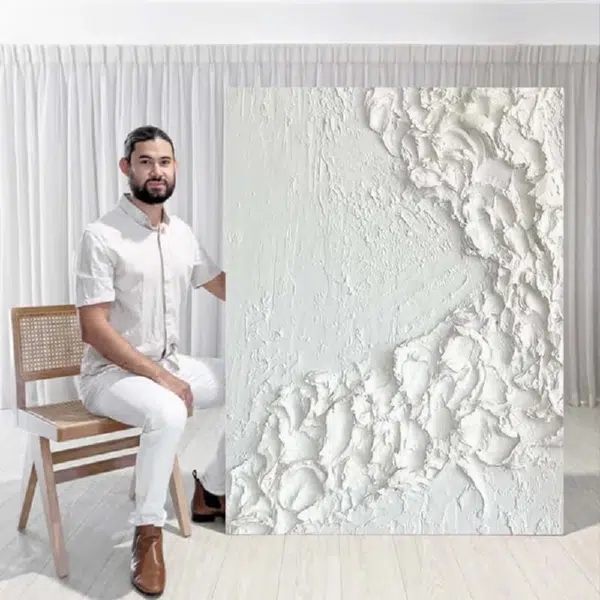
How Texture Builds a Physical, Sculptural Presence
A true textured painting has a sculptural presence. It occupies the room with a weight and substance that a flat print cannot. It feels like a unique, handcrafted object because that’s exactly what it is. Ready to practice your new skills? Look closely at the details in our latest textured paintings.
Step 5: Connect with the Abstract Painting Details and Your Own Feelings
This final step is the most important part of how to appreciate abstract art. It’s about turning your focus inward and finding your own personal connection with the artwork.
What Memories or Feelings Does the Artwork Evoke?
Look at the abstract painting details. Does a particular color combination remind you of a sunset you once saw? Does the movement in the piece feel like a stormy sea or a joyful dance? Let the artwork be a trigger for your own memories and emotions.
There’s No “Right” Answer: The Beauty of Personal Interpretation
The beauty of abstract art is that there is no single correct meaning. Your personal interpretation is valid and valuable. The artist provides the visual language; you, the viewer, complete the story. This ongoing dialogue is what makes owning original art so rewarding.
You Are Now an Art Reader
Congratulations! You have just learned the fundamentals of art appreciation. By moving through these five steps—from the overall composition to your personal feelings—you’ve learned how to “read” a textured painting. You can now see beyond the surface and appreciate the layers of skill, emotion, and story embedded in every piece. True appreciation is a conversation, and you are now equipped to take part.
Your journey into art appreciation has just begun. Start ‘reading’ the unique stories in our collection today.
Common Questions on Appreciating Textured Art
What if I don’t “get” abstract art? That’s perfectly okay! The goal isn’t to “get” a single meaning. It’s to experience it. Start by simply noticing what you feel. Does it make you feel calm, excited, or curious? Your feeling is the “point.” Our guide on how to appreciate abstract art is designed to help you on this journey.
Do I need to know art history to appreciate a painting? Absolutely not. While art history can add context, true art appreciation is a personal experience. It’s about your eyes, your feelings, and your connection to the piece in front of you.
How do I know if a textured painting is “good”? A “good” painting is one that is well-crafted with quality materials and, most importantly, one that resonates with you. Look for confidence in the brushstrokes, a thoughtful composition, and a piece that you feel you could live with and enjoy every day.
Can the meaning of a painting change over time? Yes, and that’s one of its greatest strengths. As your own life experiences change, you may find new meanings and connections in an artwork you’ve lived with for years. An original painting from Oilarthub grows with you.