

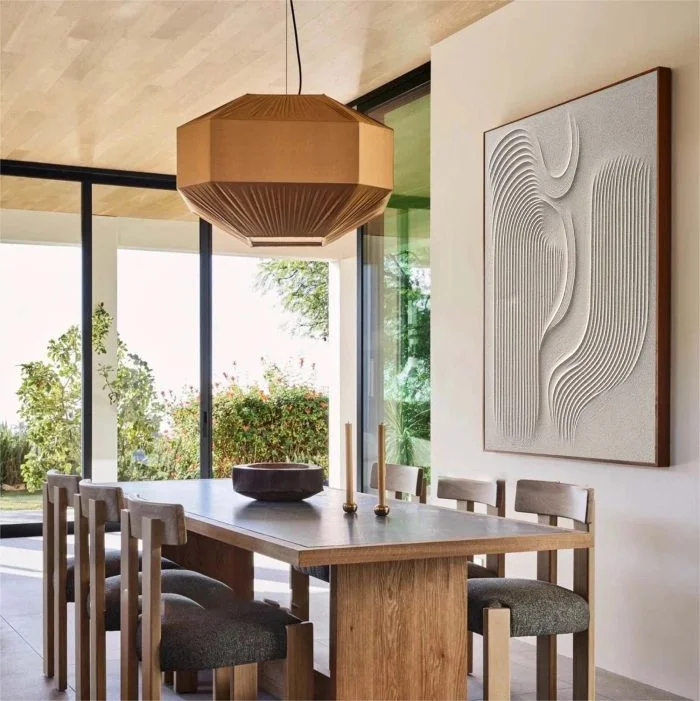
Tired of the pressure for perfection? Discover Wabi-Sabi, the ancient Japanese philosophy of finding beauty in imperfection, and learn how the right wall art can create a truly serene and soulful home. In our fast-paced, flawless-filter world, there’s a growing desire for spaces that feel real, calm, and authentic. What is Wabi-Sabi? It’s the answer to that desire, and Wabi-Sabi wall art is the key to bringing this peaceful philosophy to your walls.
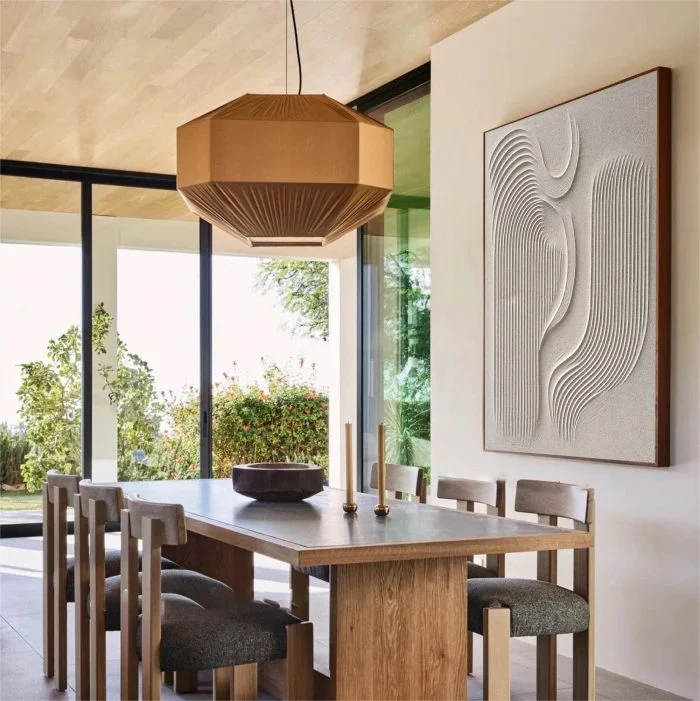
What is Wabi-Sabi? More Than Just a Minimalist Trend
While it shares some visual similarities with minimalism, Wabi-Sabi is much deeper. It’s a worldview centered on the acceptance of transience and imperfection. It’s about finding profound beauty in the humble, the flawed, and the authentic.
The Core Principles: Impermanence, Asymmetry, and Simplicity
The philosophy of Wabi-Sabi is built on a few core ideas. It honors things that are impermanent and incomplete. It celebrates asymmetry over perfect balance. And it values a deep, resonant simplicity that is uncluttered yet full of character. It’s the beauty of a weathered stone, a handmade ceramic bowl, or a single, gnarled branch.
Wabi-Sabi vs. Minimalism: The Crucial Difference is Soul
Here’s the key difference: Minimalism seeks to eliminate the unnecessary to achieve a clean, modern aesthetic. Wabi-Sabi, on the other hand, embraces the organic, the aged, and the handmade to create a warm, soulful, and zen-like atmosphere. While minimalism can sometimes feel cold, Wabi-Sabi always feels warm and inviting.
The Soul of Wabi-Sabi Wall Art: Texture, Tone, and Form
So, what makes a piece of art “Wabi-Sabi”? It’s not about the subject matter, but about its inherent qualities. The soul of Wabi-Sabi wall art lies in its texture, its color palette, and its form.
The Beauty of Minimalist Texture and Imperfect Finishes
Texture is paramount. We’re not talking about slick, perfect surfaces. Wabi-Sabi celebrates minimalist texture that feels natural and handmade. Think of the rough feel of plaster, the subtle grain of wood, or the uneven surface of an artist’s canvas. This imperfect wall art has a tactile quality that feels honest and real.
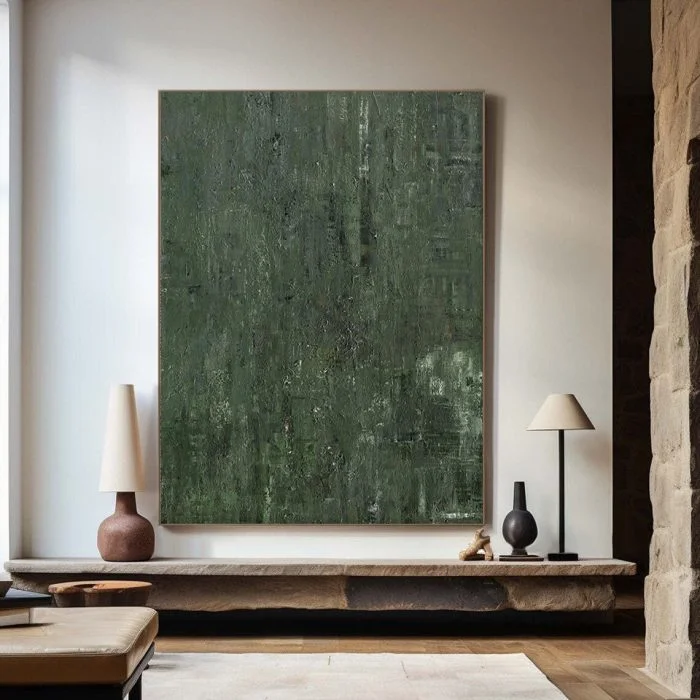
The Power of a Neutral, Earthy, and Muted Palette
What colors are best for a Wabi-Sabi home? The Wabi-Sabi color scheme is drawn from nature. It’s an earthy palette of soft whites, warm greys, beige, stone, and muted greens. This neutral textured art doesn’t shout for attention; it creates a quiet, cohesive backdrop for a peaceful life.
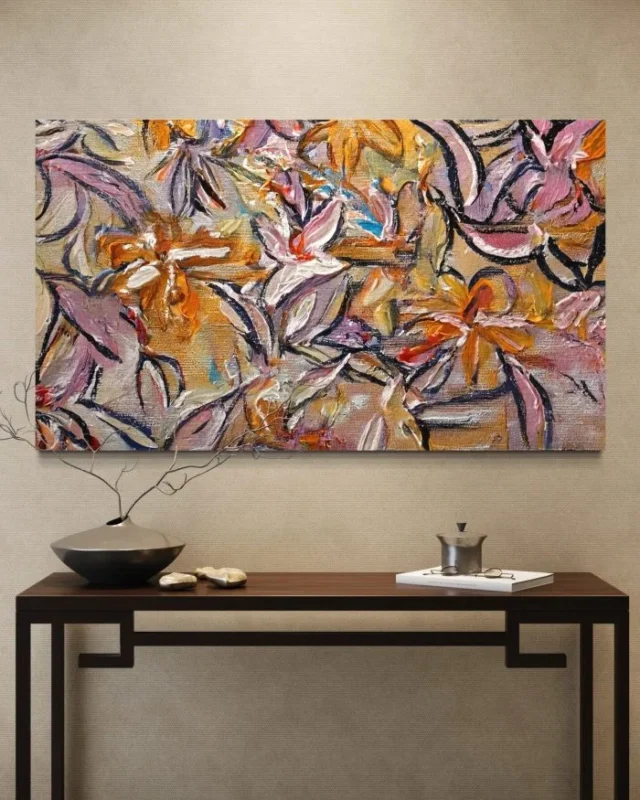
Embracing Organic, Asymmetrical, and “Unfinished” Forms
Wabi-Sabi art favors organic forms over sharp, geometric lines. The compositions are often asymmetrical, feeling more natural and less rigid. There can be a beautiful sense of the “unfinished,” where the artist’s process is still visible, reminding us of the human hand that created it.
How to Choose Wabi-Sabi Art for Your Japandi Style Decor
The Wabi-Sabi philosophy is the spiritual heart of the hugely popular Japandi style decor, which blends Japanese and Scandinavian design. Choosing the right art is crucial to achieving this look.
Look for Art That “Breathes”: The Importance of Negative Space
In a Japandi interior, less is more. Choose an artwork that uses negative space effectively. The empty areas around the main subject are just as important as the subject itself. This allows the artwork to “breathe” and contributes to the room’s overall sense of calm.
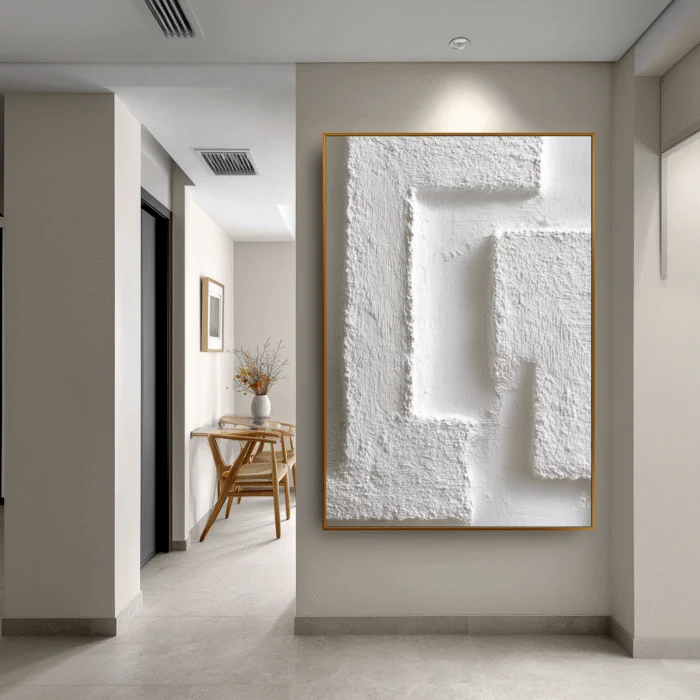
Our Curated Picks: Textured Paintings That Embody Wabi-Sabi
Many pieces in the Oilarthub collection are perfect examples of Wabi-Sabi wall art. Artworks like “White Labyrinth” or “Zen Garden Rhythms,” with their deep, plaster-like textures and monochromatic palettes, are the ultimate expression of this aesthetic. They are not just decorations; they are meditative objects. Discover the art of imperfection. Explore our curated Wabi-Sabi collection.
Pairing Your Art with Natural Elements like Wood, Stone, and Linen
To complete the look, pair your Wabi-Sabi art with other natural elements. Hang a piece of neutral textured art above a light oak console table. Let its texture complement the weave of a linen sofa or the smooth surface of a stone coaster. This creates a rich, harmonious, and multi-sensory environment.
Creating a Serene Home Art Experience
Wabi-Sabi isn’t just about what you hang, but how you experience it. The goal is to create a truly serene home art experience.
The Art of Placement: Finding the Quiet Center of a Room
Don’t just fill a wall. Find a place for your art that feels intentional and peaceful. This might be a quiet corner for reading, a wall in your yoga space, or a spot in your entryway that welcomes you home with a sense of calm.
Lighting Your Wabi-Sabi Art for a Calm, Meditative Atmosphere
Harsh, direct lighting is the enemy of Wabi-Sabi. Use soft, warm, indirect light to graze across the surface of your textured art. This will accentuate its beautiful imperfections and create a gentle, meditative glow in the evening.
Find Beauty in the “Enough”
Wabi-Sabi teaches us to find contentment and beauty not in striving for more, but in appreciating what is “enough.” A piece of Wabi-Sabi wall art is the perfect embodiment of this idea. It doesn’t demand your attention with bright colors or flashy designs. Instead, it offers a quiet, constant source of peace, soul, and authentic beauty.
Invite tranquility into your home. Find the piece that speaks to your soul in the Oilarthub Wabi-Sabi edit.
Your Wabi-Sabi Decor Questions Answered
Is Wabi-Sabi the same as a rustic or farmhouse style? No. While they all appreciate natural materials, rustic and farmhouse styles often have a more nostalgic, “country” feel. Wabi-Sabi is more minimalist, refined, and rooted in a Japanese philosophical tradition.
What colors are best for a Wabi-Sabi home? Think of a walk in nature: the colors of stone, sand, dry grass, misty forests, and cloudy skies. A muted, earthy palette of whites, beiges, greys, and soft, desaturated greens and blues is ideal.
Can a large or bold painting still be considered Wabi-Sabi? Yes, if its core qualities align with the philosophy. A large painting with a simple, organic form and a heavy, plaster-like texture can be a powerful Wabi-Sabi statement. The “boldness” comes from its authentic texture, not from loud colors.
Where can I find authentic Wabi-Sabi wall art? Authentic Wabi-Sabi wall art is handmade, imperfect, and full of character. It’s not something you’ll find in a mass-market store. At Oilarthub, we have a curated collection of handmade, textured paintings that perfectly embody this beautiful and serene philosophy.