

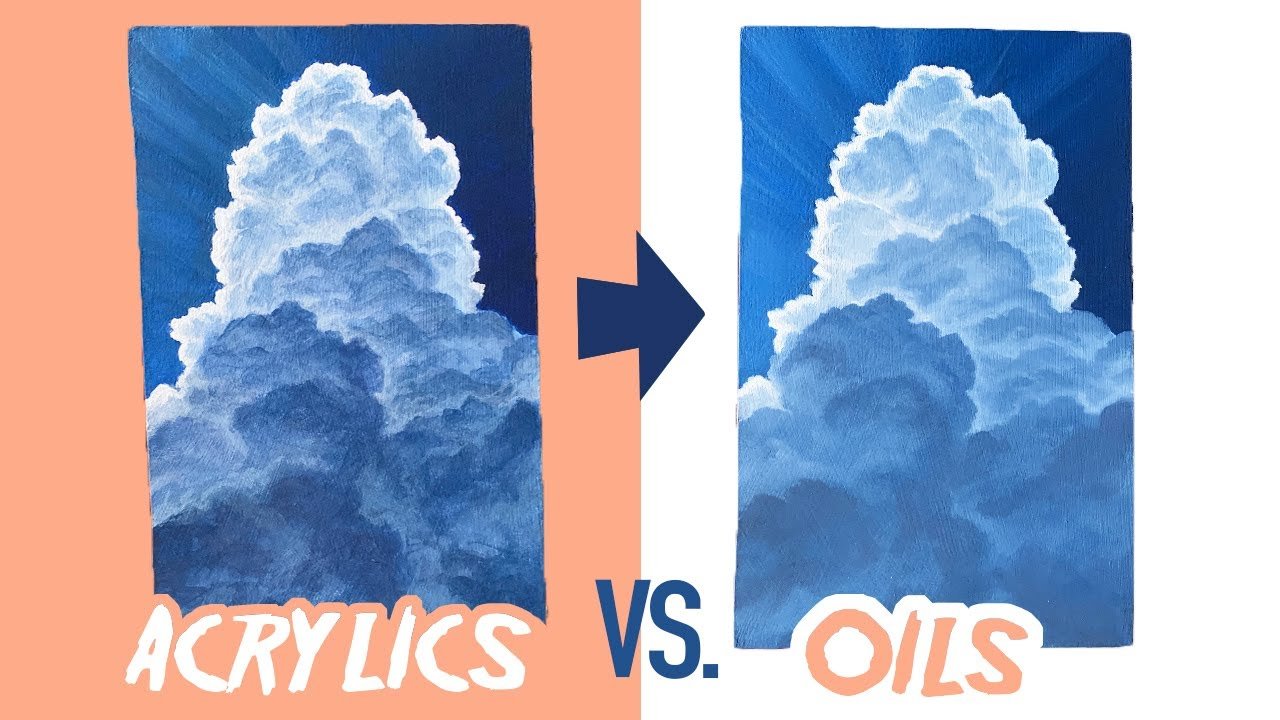
Choosing between acrylic and oil? This expert guide breaks down the key differences in texture, finish, color, and durability to help you select the perfect modern art medium for your home. In the world of original art, the acrylic vs oil painting debate is a classic one. Both are exceptional professional mediums, and at Oilarthub, our artists are masters of each. There is no “better” choice—only the choice that’s better for you.

The Fundamental Difference: Drying Time and Binder
The most basic difference comes down to chemistry. Oils use a natural oil (like linseed) as a binder and dry slowly through oxidation. Acrylics use a polymer emulsion as a binder and dry quickly through evaporation. This core difference in drying time dictates how an artist works with them.
Oils: Slow-Drying for Seamless Blending
The slow drying time of oils is their superpower. It allows artists days, or even weeks, to work on a piece, creating incredibly soft, seamless blending and subtle transitions of color. This gives oil paintings their classic, luminous quality.

Acrylics: Fast-Drying for Sharp Edges and Layering
Acrylics, on the other hand, can be dry to the touch in minutes. This speed is perfect for creating sharp, clean edges, bold geometric shapes, and building up distinct layers of color quickly. It lends itself to a very direct and decisive style of painting.

Texture and Painting Finish: The Look and Feel
For lovers of textured art, the medium’s ability to hold its shape is crucial. Is acrylic or oil paint better for texture? Both are excellent, but they offer different textural personalities.
Creating Impasto: Can Both Mediums Achieve Heavy Texture?
Yes, both mediums are fantastic for the impasto technique. Professional heavy-body acrylics can be sculpted into stiff peaks and hold sharp details. Oils, with their buttery consistency, can also be built up to create a lush, heavy texture. The choice often comes down to the artist’s preference for working speed.
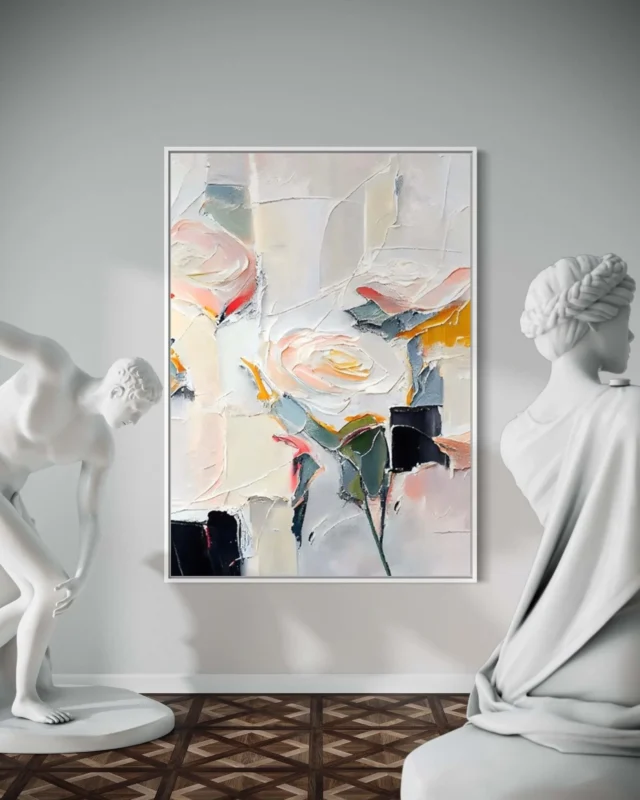
The Final Sheen: The Natural Luster of Oils vs. the Versatility of Acrylic Finishes (Matte to Gloss)
A key difference is the painting finish. Oil paints naturally dry to a rich, satin luster that has a deep, luminous quality. Acrylics naturally dry to a more matte or semi-matte finish. However, an acrylic painting’s final sheen is highly versatile and can be modified with a final varnish to be anything from dead flat matte to a high-gloss, glass-like surface. This makes textured acrylic art highly adaptable.
Color Behavior: Vibrancy, Blending, and Permanence
How colors behave as they are applied and as they age is another important consideration.
Color Shift: Do Colors Darken as They Dry?
Do colors darken as they dry? This is a well-known characteristic of acrylics. As the white polymer binder turns clear upon drying, acrylic colors can appear slightly darker than when they were wet. Artists learn to compensate for this. Oils, on the other hand, have virtually no color shift, meaning the color the artist mixes is the color you see.
Blending Capabilities: Soft Transitions vs. Bold Statements
As mentioned, the slow drying time of oils makes them the undisputed champion of soft, subtle blending. This is ideal for creating atmospheric landscapes or delicate portraits. The quick-drying nature of acrylics makes them perfect for creating bold, distinct blocks of color with high contrast.
Long-Term Vibrancy and Richness of Color
Both modern professional oils and acrylics are formulated for exceptional vibrancy and permanence. They are packed with high-quality pigments and designed to resist fading for a century or more. The “richness” of oils comes from the way light refracts through the oil binder, giving it a unique depth.
Durability and Longevity: An Archival Perspective
When you invest in an original painting, you want it to last. Both mediums offer excellent durability and longevity.
Flexibility: Which is More Resistant to Cracking?
Which is more resistant to cracking? Acrylic paint is known for its superior flexibility. The polymer binder remains flexible even when dry, making it extremely resistant to cracking. While modern oil painting techniques have greatly reduced the risk, very old, improperly handled oil paintings can sometimes show fine cracks (craquelure).
The Myth of Yellowing: Modern Oils vs. Traditional Formulas
You may have heard that oil paintings yellow over time. This was true for older formulas that used inferior linseed oil. However, modern professional oil paints use refined binders and are highly resistant to yellowing, ensuring your archival quality piece remains true to its original colors.
Decision Guide: Which Modern Art Medium is Best for Your Space?
So, how do you choose? Here’s a simple breakdown.
Choose Oil For: A Classic Feel, Rich Blending, and Luminous Depth
If you are drawn to a traditional, classic art feel, with soft, blended colors and a deep, glowing quality, an oil painting is a perfect choice. It exudes a timeless elegance.
Choose Textured Acrylic Art For: A Modern Look, Sharp Details, and Finish Versatility
If you love a crisp, modern look with bold colors, sharp lines, and have a specific painting finish in mind (like very matte), then textured acrylic art is likely your ideal match.
Whether you prefer the luminous depth of oil or the modern versatility of acrylic, our artists are masters of both. Explore the collection to see these mediums in action.
Trust the Artist, Love the Art
In the acrylic vs oil painting discussion, there is no single winner. Both are premier, professional mediums capable of producing breathtaking, lasting works of art. At Oilarthub, our artists select the medium that best serves their artistic vision for each specific piece. Your role is simple: choose the artwork that speaks to you. Rest assured that no matter the medium, it has been crafted with the utmost skill and the highest quality materials.
The choice of medium is personal, but the commitment to quality is ours. Find your masterpiece, beautifully crafted in oil or acrylic, at Oilarthub.
Acrylic vs. Oil: Your Technical Questions Answered
Can an artist mix oil and acrylic paints in the same painting? No, not directly. The fundamental rule is “fat over lean,” meaning oil can be painted over dried acrylic, but acrylic cannot be painted over oil as it will not adhere properly. Our artists are experts in these rules to ensure the painting’s stability.
Does one medium cost more than the other? Generally, professional-grade oil paints are slightly more expensive than professional acrylics due to the cost of the pigment and binder. However, the final price of an artwork is determined more by the artist’s time, skill, and the size of the piece than by the raw material cost.
Which medium is more “archival” or better for an art investment? Both modern professional oils and acrylics are considered fully archival, meaning they are designed to last for many generations without significant degradation. From an art investment perspective, the artist’s reputation and the quality of the artwork itself are far more important factors than the medium used.
What kind of varnish is used for each type of painting? Each medium requires a specific type of varnish. Oil paintings are protected with a removable varnish that allows for future cleaning if ever needed. Acrylic paintings are sealed with a permanent polymer varnish. At Oilarthub, we apply the correct archival varnish to every piece to ensure its protection and longevity.