

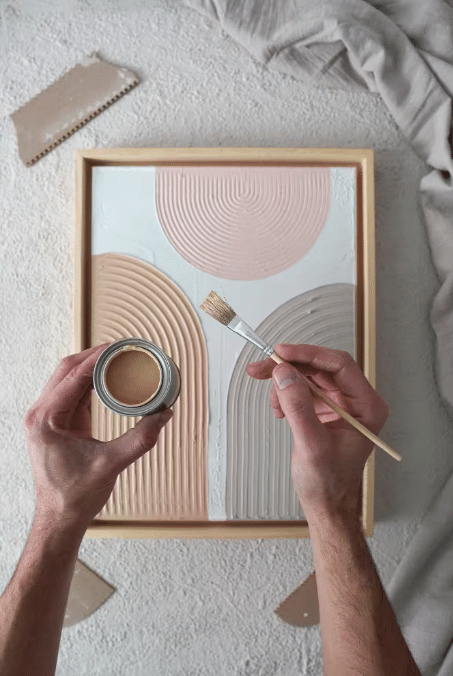
Ever wondered what happens in an artist’s studio? Go behind the scenes and discover the creative process, inspiration, and passion behind every handmade Oilarthub painting. A finished textured art piece is a beautiful object, but it’s also the final chapter of a deeply personal journey. This is a look into that journey—an artist’s perspective on the making of abstract art.
The Spark: Where Does Inspiration for Abstract Art Come From?
The creative process never begins with a blank canvas. It begins with a spark of inspiration. But where does that spark come from for something as non-representational as abstract art? The answer is everywhere.
Finding Beauty in Nature, Music, and Everyday Moments
An artist might be inspired by the jagged texture of a rock face, the chaotic harmony of a jazz song, or the way morning light filters through a window. It’s about capturing a feeling, not an image. The goal is to translate that fleeting sensory experience into color, form, and, most importantly, texture.
The Role of a Mood Board in an Artist’s Creative Process
To organize these feelings and ideas, many artists create a mood board. This might be a physical board or a digital file filled with color swatches, photos, fabric scraps, and notes. The mood board serves as a visual guide and emotional anchor throughout the entire creative process, ensuring the final piece stays true to the initial spark.

The Dialogue with Materials: Choosing the Right Tools
An artist’s tools are their partners in creation. The choice of canvas, paint, and applicators is a critical part of the process, a true dialogue with materials.
Why the Canvas Weave Matters for Building Texture
The journey of a textured art piece starts with the right foundation. A tightly woven, artist-grade canvas provides the necessary strength to hold heavy layers of paint. Its fine tooth grips the initial strokes, creating a stable base for the artist to build upon.
A Palette Knife or a Brush? An Artist’s Choice
This choice defines the character of the artwork. A brush can create soft, blended textures. But for the bold, sculptural marks that define many of our pieces, the palette knife is king. It allows the artist to apply thick, confident strokes, literally sculpting the paint on the canvas.

The Creative Process in Action: Building a Painting Layer by Layer
This is where the magic happens. The making of abstract art is a dance between planning and spontaneity, a patient process of building layers.
From the Initial Sketch to the First Layer of Color
Even abstract art often begins with a loose compositional sketch. The artist then applies the first layer of color, establishing the overall mood and color story. This initial layer is often thin, serving as a map for the textures to come.
The Dance of Addition and Subtraction: Sculpting the Texture
Next comes the heart of the process. The artist begins adding thick layers of paint, often with a palette knife. But it’s not just about adding; it’s also about subtracting—scraping away areas, carving lines into the wet paint, and blending edges. It’s a physical, energetic dance.
Stepping Back: The Importance of Pausing and Reflecting
A crucial, yet often unseen, part of the creative process is pausing. The artist will step back from the canvas, sometimes for hours or even days. This distance allows them to see the work with fresh eyes, assess the balance, and decide on the next move.
The Joy and Challenge: Embracing “Happy Accidents”
No creative journey is a straight line. The process is filled with moments of both frustration and serendipity. From an artist’s perspective, these moments are what give the work its soul.
Overcoming a “Creative Block”: An Artist’s Perspective
What’s the most challenging part of the creative process? Often, it’s the feeling of being stuck, known as a creative block. Artists overcome this by revisiting their mood board, experimenting with new color mixes, or simply taking a break to let the subconscious mind work.
How Unplanned Moments Often Become the Best Parts of a Painting
Sometimes the most beautiful part of a painting is an unplanned drip of paint or an unexpected color blend. Artists call these “happy accidents.” Learning to embrace and incorporate these moments is a key part of the mastery of handmade art. It’s what ensures every piece is truly unique.
The Final Stroke: How an Artist Knows When a Painting is Finished
Perhaps the most asked question in any artist interview is, “How do you know it’s done?” There is no formula. It’s a matter of intuition and feeling.
Listening to the Artwork: A State of Balance and Harmony
An artist knows the work is complete when nothing more can be added or taken away without disrupting its harmony. The piece feels balanced, resolved, and it “speaks” for itself. It has found its voice. This is the final stroke of the mind, not the brush.
The Signature: A Final Mark of Pride and Authenticity
The artist’s signature is the final touch. It’s a mark of pride, a seal of authenticity, and the artist’s personal guarantee that they have poured their skill and passion into the work.

A Piece of the Artist’s Soul in Your Home
When you look at a textured art piece from Oilarthub, you are seeing more than just paint on a canvas. You are seeing the culmination of inspiration, the result of a passionate creative process, and the tangible evidence of an artist’s joy and dedication. You’re not just buying a painting; you’re owning a piece of a creative journey.
Discover the story that speaks to you at Oilarthub.
An Artist Interview: Quick Questions
How long does it typically take to create one textured painting? It varies greatly depending on size, complexity, and the building layers technique. It can range from several days for a smaller piece to weeks for a large, intricate one, not including crucial drying time between layers.
Do you listen to music while you paint? Absolutely! Music is a huge source of inspiration. The tempo and mood of the music often translate directly into the energy of the brushstrokes and the rhythm of the composition.
What’s the most challenging part of the creative process? For many artists, it’s knowing when to stop. It’s easy to overwork a painting. The real challenge is to step back and trust that the piece has said what it needs to say.
What advice would you give to someone buying their first piece of original art? From an artist’s perspective, the best advice is to choose a piece that you have an emotional reaction to. Don’t worry about trends or what you “should” like. Art is personal. The right piece for you is the one you can’t stop looking at. Find yours at Oilarthub.