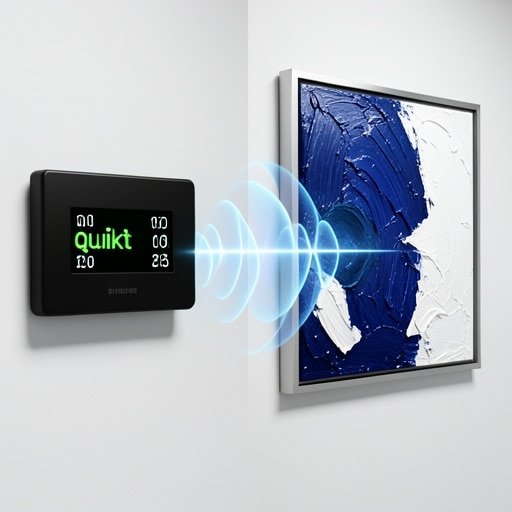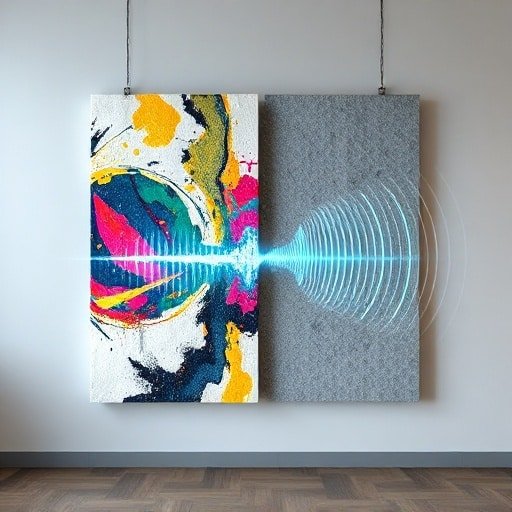

Stop guessing and start listening. Learn the designer-approved rules for where to put acoustic panels to silence your home and elevate your decor. You’ve invested in a beautiful piece of acoustic art, but now you face the final challenge: where should it go? Sound behaves like light—it reflects off hard surfaces and creates chaos. Strategic placement is 50% of the secret to a quiet home. This acoustic treatment guide will show you how to intercept those sound waves perfectly.
The Golden Rule: Target the First Reflection Point
In the world of acoustics, the “first reflection point” is the most critical area. These are the spots where sound hits the wall first after leaving its source.
What is a Reflection Point and Why Does It Matter?
When you speak or play music, sound travels in a straight line. When it hits a hard wall, it bounces back. This primary bounce causes the most distracting echoes. By placing your sound panel placement strategy on these points, you “kill” the noise before it can fill the room.
The Mirror Trick: How to Find the Sweet Spot on Your Wall
Here is a professional designer secret: sit in your usual spot (like your sofa). Have a friend move a handheld mirror along the wall. Wherever you can see your speakers or the person speaking in the mirror, that is a first reflection point. That is exactly where to put acoustic panels for maximum effect.
Living Room Strategies: Taming the Open Space
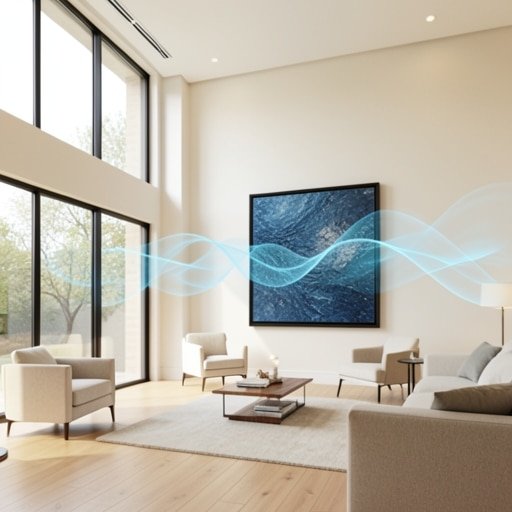
Great rooms with high ceilings are notorious for “ping-pong” echoes. You need a layout that breaks the cycle of noise.
Facing the TV: Capturing Primary Sound Projections
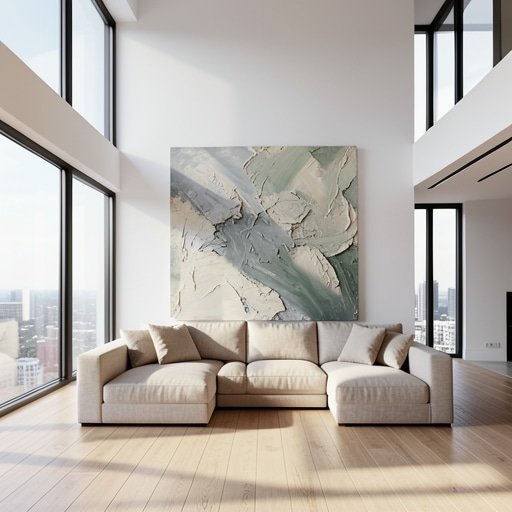
If your living room is your media hub, place your largest piece of acoustic art on the wall directly opposite the TV. This captures the powerful audio waves heading toward the back of the room, preventing them from bouncing back and muddying the sound quality. For large walls, consider Oversized Abstract Art upgraded to acoustic specs.
Parallel Walls: Breaking the “Ping-Pong” Echo Effect
In narrow living areas, sound bounces rapidly between two flat, parallel walls. To stop this, you don’t need to cover both walls. Simply place one large painting on one side to absorb the energy, effectively silencing the “ping-pong” effect.
The Dining Room & Home Office: Where Clarity is Key
In these spaces, the goal isn’t just silence; it’s clarity. You want to hear the person across the table or the voice on your Zoom call clearly.
Positioning Art for Intimate Dinner Conversations
Dining rooms often have hard tables and floors. To reduce the “din” of a dinner party, hang your acoustic art at “seated ear level.” This targets the horizontal sound waves created by guests talking, making conversations feel more intimate and relaxed.
Strategic Placement for Crystal Clear Video Calls
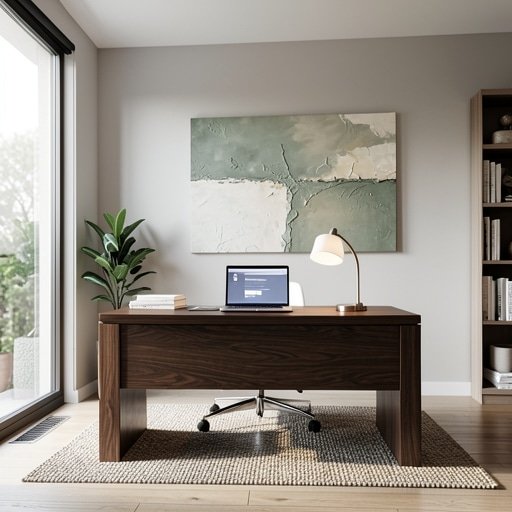
For your home office, the most effective spot is the wall directly behind your computer monitor. This catches your voice as it travels toward the wall, preventing it from reflecting back into your microphone. It makes you sound much more professional on calls.
Avoiding Common Sound Panel Placement Mistakes
Even the best home acoustics can be undermined by poor installation choices.
Don’t Hide Your Art in a Corner: Why Centering Matters
Corners naturally trap bass, but mid-to-high frequency echoes (the most annoying ones) happen in the center of the wall. Avoid tucking your art into a corner. For the best results, keep it centered on the primary reflective surfaces.
The 15% Rule: Understanding Necessary Coverage Area
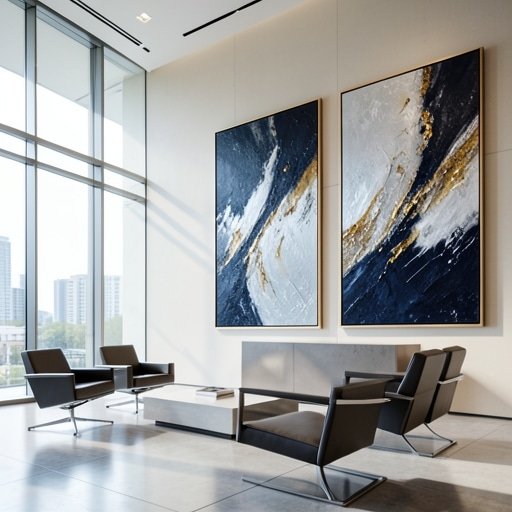
A single small painting won’t silence a massive hall. For a noticeable difference, aim to cover at least 15-20% of the wall surface area with acoustic material. If you have high ceilings, consider using Vertical Wall Art to cover more height and intercept rising sound waves.
Conclusion: Design Your Home’s New Soundscape
The difference between a “loud” house and a “quiet” home is often just a few feet of placement. By identifying your first reflection points and focusing on the areas where you communicate most, you can maximize the impact of your acoustic art. You aren’t just hanging a painting; you are designing the soundscape of your life.
Stop living with the echo. Find your perfect functional masterpiece at Oilarthub today.
Acoustic Art Installation: Common Questions
How high should I hang acoustic art for the best sound absorption? The most effective height is “ear level.” In a room where you mostly stand (like a hallway), hang it at standard eye level. In a room where you sit (office or dining room), hang it slightly lower to catch speech waves.
Do I need a panel on every wall of the room? No. Treating just one of two opposing parallel walls is often enough to break the echo cycle. Focus on the largest, flattest walls first.
Can I hang acoustic art behind a sofa? Yes! This is a great spot. Because the art is directly behind your head, it absorbs the sound waves before they can hit the wall and reflect into your ears, creating a very peaceful seating area.
Does hanging art near the ceiling help with echo? In rooms with very high ceilings, yes. It helps catch the sound that travels upward. However, for most standard rooms, focusing on the middle of the wall where voices travel is more effective for home acoustics.